
Table of Contents
ToggleArtificial Intelligence (AI) is no longer a futuristic concept—it’s the present reality reshaping how businesses connect with customers. From marketing automation to AI tools for businesses, the integration of AI in marketing is revolutionizing customer experience. With AI searches exploding globally, this topic is not only highly relevant but also highly rankable for digital visibility.
In this blog, we’ll explore how AI is transforming marketing strategies, enhancing personalization, streamlining operations, and creating memorable customer journeys.
The Rise of AI in Marketing
AI in marketing has moved beyond experimentation to become a mainstream necessity. According to industry reports, global spending on AI is expected to surpass $300 billion by 2026. Businesses are investing heavily in AI tools to stay competitive, improve efficiency, and deliver personalized experiences.
Key Drivers of AI Adoption
- Data Explosion: Businesses generate massive amounts of customer data daily. AI helps analyze this data in real time.
- Customer Expectations: Modern customers demand personalized, seamless experiences.
- Competitive Advantage: AI-powered marketing automation reduces costs and increases ROI.
How AI Tools for Businesses Enhance Customer Experience
1. Personalization at Scale
AI enables hyper-personalized marketing campaigns. Instead of generic ads, customers receive tailored recommendations based on browsing history, purchase behavior, and preferences.
- Example: Netflix uses AI to recommend shows based on viewing habits.
- Impact: 80% of consumers are more likely to purchase when offered personalized experiences.
2. Marketing Automation
Automation powered by AI streamlines repetitive tasks such as email campaigns, social media scheduling, and customer segmentation.
- Benefits: Saves time, reduces human error, and ensures consistent communication.
- Tools: Platforms like HubSpot, Salesforce Einstein, and Marketo leverage AI for automation.
3. Predictive Analytics
AI predicts customer behavior, helping businesses anticipate needs before they are expressed.
- Example: E-commerce platforms use predictive analytics to suggest products customers are likely to buy.
- Result: Increased conversion rates and customer satisfaction.
4. Conversational AI and Chatbots
AI-powered chatbots provide 24/7 customer support, answering queries instantly and improving engagement.
- Advantage: Reduces wait times and enhances customer trust.
- Future: Agentic AI will enable bots to handle complex, multi-step interactions.
The Future of AI in Marketing
Emerging Trends
- Generative AI: Creating personalized content, ad copy, and product descriptions.
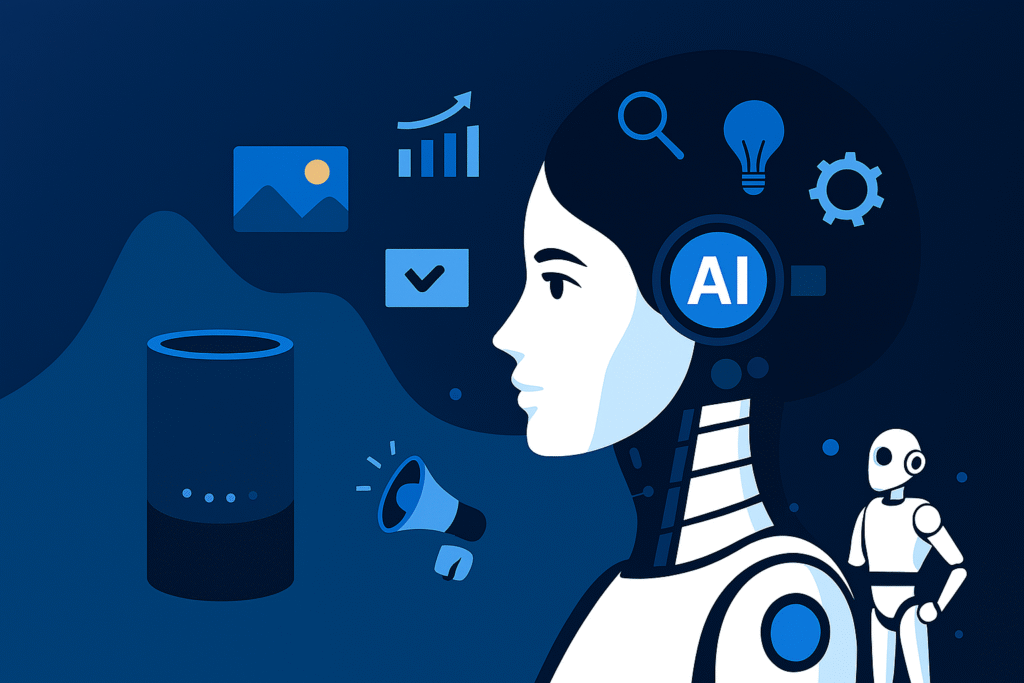
- Voice Search Optimization: AI-driven strategies for smart speakers and voice assistants.
- Visual Recognition: AI tools identifying products in images for instant shopping.
- Agentic AI: Next-gen AI systems capable of autonomous decision-making in customer service.
Challenges Ahead
- Data Privacy: Balancing personalization with customer trust.
- Ethical Use of AI: Avoiding bias in algorithms.
- Integration Costs: Small businesses may struggle with initial investment.
Why Businesses Must Embrace AI in Marketing
Ignoring AI in marketing is no longer an option. Companies that adopt AI tools for businesses gain:
- Enhanced customer loyalty through personalized experiences.
- Improved efficiency with marketing automation.
- Higher ROI from predictive insights.
AI is not replacing human creativity—it’s amplifying it. Marketers can focus on strategy and storytelling while AI handles data-driven tasks.
Conclusion
The future of AI in marketing is about creating smarter, more intuitive customer experiences. From AI tools for businesses to marketing automation, artificial intelligence is transforming how brands engage with audiences. Companies that embrace AI will not only survive but thrive in the digital-first era